

Sitio sobre Santo Tomás de Aquino -su vida, su obra, su filosofía y sus discípulos- que reemplaza a los anteriores www.Geocities.com/Tomistas y StThAquinas.8m.com (en internet desde Agosto de 1999)
Mostrando las entradas con la etiqueta Metafísica. Mostrar todas las entradas
Mostrando las entradas con la etiqueta Metafísica. Mostrar todas las entradas
jueves, 11 de octubre de 2012


martes, 10 de abril de 2012
Estudio sobre la mereología medieval temprana: Boecio, Abelardo y el pseudo-Joscelino
A study in early medieval mereology: Boethius, Abelard, and pseudo-Joscelin
Arlig, Andrew W.
Doctor of Philosophy, Ohio State University, Philosophy, (2005)
The study of parts and wholes, or mereology, occupies two of the best philosophical minds of twelfth-century Europe, Abelard and Pseudo-Joscelin. But the contributions of Abelard and Pseudo-Joscelin cannot be adequately assessed until we come to terms with the mereological doctrines of the sixth century philosopher Boethius. Apart from providing the general mereological background for the period, Boethius influences Abelard and Pseudo-Joscelin in two crucial respects. First, Boethius all but omits mention of the classical Aristotelian concept of form. Second, Boethius repeatedly highlights a rule which says that if a part is removed, the whole is removed as well. Abelard makes many improvements 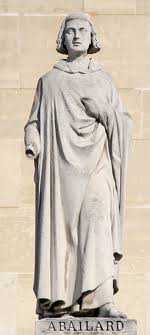 upon Boethius. His theory of static identity accounts for the relations of sameness and difference that hold between a thing and its part. His theory of identity also provides a solution to the problem of material constitution. With respect to the problem of persistence, Abelard assimilates Boethius’ rule and proposes that the loss of any part entails the annihilation of the whole. More precisely, Abelard thinks that the matter of things suffers annihilation upon the gain or loss of even one part. He also holds that many structured wholes, namely artifacts, are strictly dependent upon their parts. Yet Abelard insists that human beings survive a variety of mereological changes. Abelard is silent about objects which are neither artifacts nor persons. I argue that Abelard has the theoretical resources to provide an account of the persistence of these types of object, so long as some forms are ontologically robust. Pseudo-Joscelin rejects the thesis that the removal of any part entails the destruction of the whole. The annihilation of a whole follows only from the removal of essential parts. Pseudo-Joscelin employs two basic principles in his theory of persistence. First, forms and the functions encoded in them play a primary role in identity and persistence. He also makes use of a genetic criterion. Pseudo-Joscelin expands both principles and employs them when he vigorously defends the thesis that a universal is a concrete whole composed of particulars from Abelard’s criticisms.
upon Boethius. His theory of static identity accounts for the relations of sameness and difference that hold between a thing and its part. His theory of identity also provides a solution to the problem of material constitution. With respect to the problem of persistence, Abelard assimilates Boethius’ rule and proposes that the loss of any part entails the annihilation of the whole. More precisely, Abelard thinks that the matter of things suffers annihilation upon the gain or loss of even one part. He also holds that many structured wholes, namely artifacts, are strictly dependent upon their parts. Yet Abelard insists that human beings survive a variety of mereological changes. Abelard is silent about objects which are neither artifacts nor persons. I argue that Abelard has the theoretical resources to provide an account of the persistence of these types of object, so long as some forms are ontologically robust. Pseudo-Joscelin rejects the thesis that the removal of any part entails the destruction of the whole. The annihilation of a whole follows only from the removal of essential parts. Pseudo-Joscelin employs two basic principles in his theory of persistence. First, forms and the functions encoded in them play a primary role in identity and persistence. He also makes use of a genetic criterion. Pseudo-Joscelin expands both principles and employs them when he vigorously defends the thesis that a universal is a concrete whole composed of particulars from Abelard’s criticisms.miércoles, 4 de abril de 2012
miércoles, 12 de octubre de 2011
Jornada tomista en París
SOCIÉTÉ THOMISTE
CENTRE D’ÉTUDES DU SAULCHOIR
Journée Thomas d’Aquin
samedi 3 décembre 2011
Contingence, nécessité et Providence chez Thomas d’Aquin
09 h 30 Accueil
10 h Emmanuel DURAND (Paris)
L’extension de la Providence aux contingences et son application aux
singulier selon Thomas d’Aquin
11 h 30 Pasquale PORRO (Bari)
Nécessité, contingence et hazard dans l’univers de Thomas d’Aquin
13 h Pause repas
14 h 15 G. BERCEVILLE, M. BORGO, I. COSTA, R. IMBACH, A. OLIVA
Présentation de quelques ouvrages de philosophie et de
théologie médiévales
Les séances auront lieu au Saulchoir, Salle « Dumont » du Centre ISTINA, 45, rue de la Glacière Paris XIIIe (Métro 6, station Glacière. Bus 21, arrêt Normann) Entrée libre.
Nous vous prions de communiquer votre participation au repas (15 €) avec la communauté de Saint-Jacques, avant le 21 novembre, en écrivant à :
Adriano Oliva : aoliva@commissio-leonina.org
jueves, 22 de septiembre de 2011
miércoles, 3 de agosto de 2011
Nuevo blog de Néstor Martínez
2.08.11
Fe y Razón en el tomismo
A las 9:23 PM, por Néstor
Categorías : Sin categorías
Categorías : Sin categorías
 Parece útil ofrecer un breve resumen de lo que entendemos son algunos principios fundamentales del tomismo en esta materia, como base para toda discusión filosófica o teológica sobre estos temas.
La fe cristiana y católica es infaliblemente verdadera por estar fundada en la Palabra de Dios; la inteligencia humanaconoce la verdad con certeza metafísica en los primeros principios evidentes y en las conclusiones que derivan necesariamente de los mismos.
Así entendidas, la fe y la razón no pueden oponerse, porque la verdad no puede ser contraria a la verdad. Por el principio de no contradicción, dos proposiciones contradictorias no pueden ser ambas verdaderas.
Teológicamente, tanto la verdad de la fe como la verdad de la razón proceden de Dios, como Creador del hombre y de la razón humana, y como Autor de la Revelación sobrenatural. Y Dios no puede contradecirse a Sí mismo.
viernes, 8 de julio de 2011
“Actualidad de Tomás de Aquino” (Leonardo Castellani)
Castellaniana: Artículo casi inédito: "El breve artículo de Castellani que le adjunto, “Actualidad de Tomás de Aquino”, aparentemente era inédito cuando me lo regaló Jorge Castell..."
lunes, 28 de febrero de 2011
Mesa Redonda en Roma, organizada por la SITA
Tavola rotonda
SOSTANZA E ATTO DI ESSERE
Giovedì 3 marzo 2011, ore 16
Pontificia Università della Santa Croce – Aula del Portillo
Piazza di Sant’Apollinare, 49 – (00186) Roma
Presieduta da Prof. Luis Romera
Rettore della Pontificia Università della Santa Croce
Elvio Fontana, Pontifica Università Angelicum: Essere in se – essere in altro. Uso e abuso della distinzione aristotelica
Stephen Brock, Pontificia Università della Santa Croce: Quanti atti di essere ha una sostanza? Un approccio alla distinzione reale
Marc Hausmann, Pontificia Università Urbaniana: L'atto di essere del pensiero di san Tommaso in funzione della sostanza del pensiero di Aristotele
Informazioni: info@sitaroma.org - www.sitaroma.org
viernes, 6 de agosto de 2010
Solicitud de "papers" para conferencia en Fordham
Call for papers: Fordham conference on the Metaphysics of Aquinas (March 26-27, 2011)
From the Center for Medieval Studies, Fordham University, a call for papers for their 31st Annual Conference of the Center for Medieval Studies (Lincoln Center Campus, March 26-27, 2011), entitled “The Metaphysics of Aquinas and Its Modern Interpreters: Theological and Philosophical Perspectives.” Their description:
Fordham University’s Center for Medieval Studies invites scholars from different disciplines and scholarly methodologies to explore Aquinas’s metaphysics and how it relates to various aspects of his philosophy and theology and/or to modern retrievals of his thought.
The Conference seeks to capitalize on the pluralism of Thomistic studies by inviting papers from a wide range of areas within the disciplines of philosophy and theology. Conference organizers welcome papers that may approach the topic from various branches of philosophy (such as the philosophy of religion, ontology, or natural theology), or various fields of theology, such as historical, fundamental, or systematic theology (including such areas as Trinitarian theology, Christology, or theological anthropology). Conference organizers also seek a representative variety of approaches to Aquinas and to Thomism, including those of the Dominican commentators, Transcendental Thomism, Existential Thomism, analytic philosophy, and postmodernism.
The Conference will include a special strand of sessions on what many regard as one of the central problems in the contemporary retrieval of Aquinas?s thought, namely, how to account for the mind?s knowledge of being qua being, or as this issue is often referred to, the discovery of the being of metaphysics.
If you are interested in speaking at this conference, please send a cover letter with contact information and an abstract of your paper to the Conference Committee at medievals@fordham.edu, or by regular mail to Fordham Center for Medieval Studies, Faculty Memorial Hall 405B, Bronx, New York 10458. The deadline for submissions is September 10, 2010.
Participants include:
Christopher Cullen, S.J
Brian Davies, O.P.
Lawrence Dewan, O.P.
Stephen Fields, S.J.
Paul Gondreau
Franklin T. Harkins
Gyula Klima
John Knasas
R. James Long
Steven Long
Giorgio Pini
Eleonore Stump
Rudi te Velde
Joseph Wawrykow
John WippelThere is a PDF of the conference announcement here.
Suscribirse a:
Entradas (Atom)