
Sitio sobre Santo Tomás de Aquino -su vida, su obra, su filosofía y sus discípulos- que reemplaza a los anteriores www.Geocities.com/Tomistas y StThAquinas.8m.com (en internet desde Agosto de 1999)
Mostrando las entradas con la etiqueta English. Mostrar todas las entradas
Mostrando las entradas con la etiqueta English. Mostrar todas las entradas
miércoles, 5 de diciembre de 2012


lunes, 19 de noviembre de 2012
Tomás de Aquino sobre las verdades de los no-entes
Gloria Wasserman
2007, American Catholic Philosophical Association, Proceedings of the ACPA, Vol. 80.lunes, 29 de octubre de 2012
Proyecto "Charles De Koninck"

Gentileza de Matthew Peterson que nos avisó e indicó el enlace.
También hay una página en Facebook del Proyecto, una cuenta en Twitter y un grupo de Google.
jueves, 2 de agosto de 2012
Coloquio Internacional de Filosofía Medieval en Lisboa
UNUM VERUM BONUM
International Colloquium on Medieval Philosophy for MA, PhD and Post-doctoral Students
(CALL FOR PAPERS - October 1, 2012 )
| APRESENTAÇÃO GERAL | ||
|---|---|---|
Keynote speakers:
Alessandro Ghisalberti (Università Cattolica del Sacro Cuore) Dermot Moran (University College Dublin) Francisco Meirinhos (Universidade do Porto)
In the 13th century, Philip the Chancellor endeavored to gather and
systematize the roll of transcendentals – unum, verum, bonum – as
co-extensive properties to being; that would determine all the
subsequent medieval philosophical thought. Under the aegis of “unum,
verum, bonum”, we now seek to bring together MA, PhD and Post-doctoral
researchers on Medieval Philosophy. Their research may be focused on
ontology or metaphysics, theory of knowledge (verum), ethics, politics
and economics (bonum), aesthetics (pulchrum was itself considered within
its relation with unum, verum, and bonum). The scope of this colloquium
extends not only to the different philosophical fields explored
throughout the Middle Ages, but also to different philosophical lineages
(Aristotelian philosophy and Neoplatonism) and to the different
religious inspirations (Judaism, Christianity and Islamism).
It is the main purpose of this colloquium to bring together MA, PhD and Post-Doctoral researchers in Medieval Philosophy from universities around the world, and also to encourage philosophical discussion between all the participants. Should you be interested in participating in this meeting we invite you to submit a paper proposal (according to the rules stated below). We welcome you in advance to Lisbon, the city of the seven hills.
Informations: unum.verum.bonum@gmail.com
Abstract submissions: callforpapers.uvb@gmail.com

Centro de Filosofia da Universidade de Lisboa
| ||
| CALL FOR PAPERS | ||
| Data de candidatura:2012-07-16 00:00:00 a 2012-10-01 00:00:00 Download Instructions |
martes, 10 de julio de 2012
"Averroes y Aquino sobre la naturaleza dialéctica de la Teología reveleda" (fragmento)
Is Theology a Science or is it Dialectical? St. Thomas' Nuanced Position

The following is an excerpt
from a paper I recently presented at a conference titled Saint Thomas d'Aquin et ses sources Arabs / Aquinas and the Arabs at the Sorbonne in Paris (which is, coincidentally,
the modern successor institution of the medieval University of Paris, where St.
Thomas taught). The title of the paper was: "Averroes and Aquinas on the Dialectical Nature of Revealed Theology."
Abstract
Two of the
greatest Aristotelian commentators, Averroes and Aquinas, used the Aristotelian
distinction between demonstrative, dialectical, and rhetorical discourses to
assign an epistemological status to religious or theological knowledge, that
is, to conclusions drawn from revelation. But their respective views on this
point turned out to be very different, even opposite. Averroes considered
religious knowledge to be dialectical in nature, whereas Aquinas believed
revealed Christian theology to be a demonstrative science. The author shows
that both of these greater Aristotelian commentators strive, although very differently,
to be faithful to Aristotle concerning the epistemological status of theology.
Ultimately, however, their approaches converge, particularly insofar as in both
accounts, theology is dialectical in nature, at least in a qualified sense in
the case of Aquinas.
[LEER]
miércoles, 4 de julio de 2012
La belleza para Santo Tomás (Maritain)
“Saint Thomas, who was as  simple as he was wise, defined the beautiful as that which, being seen, pleases: id quod visum placet. These four words say all that is necessary: a vision, that is to say, an intuitive knowledge, and a delight. The beautiful is what gives delight — not just any delight, but delight in knowing; not the delight peculiar to the act of knowing, but a delight which superabounds and overflows from this act because of the object known. If a thing exalts and delights the soul by the very fact that it is given to the soul’s intuition, it is good to apprehend, it is beautiful.
Beauty is essentially an object of intelligence, for that which knows in the full sense of the word is intelligence, which alone is open to the infinity of being. The natural place of beauty is the intelligible world, it is from there that it descends. But it also, in a way, falls under the grasp of the senses, in so far as in man they serve the intellect and can themselves take delight in knowing.”

martes, 3 de julio de 2012
Cardenales y académicos sobre Santo Tomás y Juan Pablo II
Cardinals, scholars ponder St. Thomas Aquinas and John Paul II
CWN - July 03, 2012
Over 50 scholars and prelates, including 10 cardinals, gathered at the Vatican from June 29 to July 1 for the twelfth plenary session of the Pontifical Academy of St. Thomas Aquinas. The topic of the meeting was “The Thomistic Legacy in Blessed John Paul II and His Refounding of the Pontifical Academy of St. Thomas Aquinas.”
Cardinal Francis George of Chicago, who spoke on “Work and the Human Subject,” recalled in an interview with Vatican Radio that the Pontiff worked to revive interest in St. Thomas, who “remains the primary thinker in our history who brings together faith and reason.”
“One of the ways he did that," Cardinal George continued, "was to use phenomenology in a way similar to the way Aquinas used Aristotle. That is, faith in conversation with philosophical studies comes to develop theologies that change from time to time. Faith remains the same, but theologies can be different.”
Other speakers at the meeting included Cardinal Raymond Burke (“The Importance of St. Thomas’ Metaphysics in the Training of Priests”), Cardinal Angelo Sodano (“The Vocation to Participate in Christ’s Ministry”), Cardinal Giovanni Battista Re (“Prayer and Action in Blessed John Paul II”), and Archbishop J. Augustine Di Noia (“The Crisis of Truth in Seminaries and Universities”).
Additional sources for this story
Some links will take you to other sites, in a new window.
Some links will take you to other sites, in a new window.
jueves, 24 de mayo de 2012

martes, 10 de abril de 2012
Estudio sobre la mereología medieval temprana: Boecio, Abelardo y el pseudo-Joscelino
A study in early medieval mereology: Boethius, Abelard, and pseudo-Joscelin
Arlig, Andrew W.
Doctor of Philosophy, Ohio State University, Philosophy, (2005)
The study of parts and wholes, or mereology, occupies two of the best philosophical minds of twelfth-century Europe, Abelard and Pseudo-Joscelin. But the contributions of Abelard and Pseudo-Joscelin cannot be adequately assessed until we come to terms with the mereological doctrines of the sixth century philosopher Boethius. Apart from providing the general mereological background for the period, Boethius influences Abelard and Pseudo-Joscelin in two crucial respects. First, Boethius all but omits mention of the classical Aristotelian concept of form. Second, Boethius repeatedly highlights a rule which says that if a part is removed, the whole is removed as well. Abelard makes many improvements 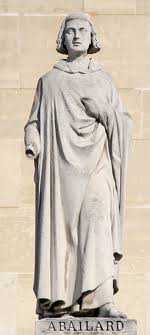 upon Boethius. His theory of static identity accounts for the relations of sameness and difference that hold between a thing and its part. His theory of identity also provides a solution to the problem of material constitution. With respect to the problem of persistence, Abelard assimilates Boethius’ rule and proposes that the loss of any part entails the annihilation of the whole. More precisely, Abelard thinks that the matter of things suffers annihilation upon the gain or loss of even one part. He also holds that many structured wholes, namely artifacts, are strictly dependent upon their parts. Yet Abelard insists that human beings survive a variety of mereological changes. Abelard is silent about objects which are neither artifacts nor persons. I argue that Abelard has the theoretical resources to provide an account of the persistence of these types of object, so long as some forms are ontologically robust. Pseudo-Joscelin rejects the thesis that the removal of any part entails the destruction of the whole. The annihilation of a whole follows only from the removal of essential parts. Pseudo-Joscelin employs two basic principles in his theory of persistence. First, forms and the functions encoded in them play a primary role in identity and persistence. He also makes use of a genetic criterion. Pseudo-Joscelin expands both principles and employs them when he vigorously defends the thesis that a universal is a concrete whole composed of particulars from Abelard’s criticisms.
upon Boethius. His theory of static identity accounts for the relations of sameness and difference that hold between a thing and its part. His theory of identity also provides a solution to the problem of material constitution. With respect to the problem of persistence, Abelard assimilates Boethius’ rule and proposes that the loss of any part entails the annihilation of the whole. More precisely, Abelard thinks that the matter of things suffers annihilation upon the gain or loss of even one part. He also holds that many structured wholes, namely artifacts, are strictly dependent upon their parts. Yet Abelard insists that human beings survive a variety of mereological changes. Abelard is silent about objects which are neither artifacts nor persons. I argue that Abelard has the theoretical resources to provide an account of the persistence of these types of object, so long as some forms are ontologically robust. Pseudo-Joscelin rejects the thesis that the removal of any part entails the destruction of the whole. The annihilation of a whole follows only from the removal of essential parts. Pseudo-Joscelin employs two basic principles in his theory of persistence. First, forms and the functions encoded in them play a primary role in identity and persistence. He also makes use of a genetic criterion. Pseudo-Joscelin expands both principles and employs them when he vigorously defends the thesis that a universal is a concrete whole composed of particulars from Abelard’s criticisms.lunes, 19 de marzo de 2012
El regreso de la filosofía política tomista
The Return of Thomistic Political Philosophy, Part I
Two volumes of Jacques Maritain’s political philosophy are being re-issued by Ignatius Press. The books in question, Christianity and Democracy and The Rights of Man and the Natural Law, are being released as a single volume. We spoke with Raymond Dennehy, professor of philosophy at the University of San Francisco and author of the foreword to the re-issue. Below is the first part of that interview. Part two of the interview will appear shortly. [Read]
martes, 7 de febrero de 2012
Homilía del P. John Harris OP en Dublin el 28-I-2012
This is a recording of the homily given by Fr. John Harris OP (Regent of Studies) at the Mass celebrated for the Studium in Dublin, on the Feast of St. Thomas Aquinas (28 Janaury, 2012).
Among other things, Fr. John said: "To sit with him only at our desks and not to kneel with Saint Thomas in adoration is to fail to know Aquinas or to practice seriously the art of theology."
lunes, 30 de enero de 2012
Relicario de Santo Tomás de Aquino
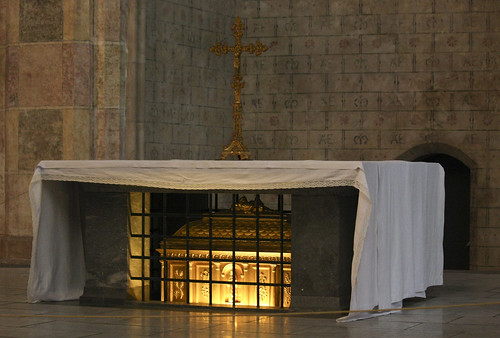
Reliquary of St Thomas Aquinas
"The glory of blessed Thomas flashed forth in a divine prodigy as a wonderfully fragrant perfume flowed from his tomb; * shining with purity, he lived without guilt..."
- from a Matins responsory for the feast of St Thomas Aquinas, which is today.
This is the tomb of St Thomas, the great doctor the Church, humbly enshrined beneath an altar in the former medieval Dominican church called the Jacobin church in Toulouse. They were brought to this church on 28 January 1369, which is why his feast is now kept on this date.
By Lawrence OP.
miércoles, 4 de enero de 2012
La Filosofía da a los alumnos una mejora en clase
Andrew Denholm, corresponsal de educación
PIENSO, luego soy mejor alumno.
[Escocia, The Herald, 31 de diciembre de 2011] Un estudio realizado por investigadores escoceses demuestra que los alumnos que toman parte en lecciones de filosofía desarrollan más rápidamente habilidades de escucha, pensamiento y cuestionamiento más complejas que aquéllos que no.
 La investigación de la Universidad de Strathclyde encontró que alumnos tan jóvenes como de cinco años demostraron también tomar decisiones más sofisticadas luego de un programa de ocho semanas.
Los exámenes realizados en más de cien alumnos de ocho escuelas diferentes en la zona central de Escocia --incluyendo algunos alumnos secundarios-- obtuvieron que en promedio mejoraban un 20% en el puntaje que evaluaba la comprensión de dilemas morales simples.
Si bien existió una clara correlación entre la edad de los niños y su rendimiento, el informe encontró que "el patrón de mejora se da consistentemente en todas las franjas de edades".
La Dra. Claire Cassidy, una de los autores del estudio y profesora en la Facultad de Educación de la Universidad de Strathclyde, llamó a un uso más extendido de la filosofía en las escuelas.
"Existe todo un cuerpo de evidencias que demuestra que los alumnos se benefician mucho más al explorar cuestiones filosóficas simples y al conversar sobre ello y escucharse unos a otros.
"Entendemos que puede ser difícil para las escuelas introducir filosofía puesto que exige inversiones de tiempo y esfuerzo por parte de maestros que ya están muy ocupados.
"También puede haber resistencia a ello debido a que los beneficios no son fácilmente mensurables y son difíciles de encarar.
"Sin embargo, en la investigación que realizamos pudimos ver claros beneficios en la manera en que los alumnos podían pensar acerca de cuestiones y llegar a juicios razonados."
En los últimos años, la filosofía ha tenido un papel cada vez más protagónico en las escuelas, con un mayor estudio de la obra de los grandes filósofos como Descartes, Platón o Aristóteles, que han tenido algo así como un renacimiento en el nivel educativo más alto.
Hace casi diez años, el Consejo Escolar de Clackmannanshire fue pionero al enseñar la llamada "búsqueda filosófica" en las escuelas primarias, cuando la materia fue introducida en algunas de las áreas geográficas más humildes.
Un inicio de estudio realizado en el ciclo 2003-2004 demostró que los niños de cinco a once años a los que se les enseña filosofía muestran una "ganancia" de inteligencia de más de siete puntos en el coeficiente intelectual.
Otro estudio demostró que estas "ganancias" se mantuvieron años después, incluso cuando los niños ya no tenían acceso al programa.
En el estudio más reciente realizado por la Universidad de Strathclyde, grupos pequeños de alumnos recibían al comienzo de cada sesión un "estímulo" en la forma de un poema, un artículo de diario, una fotografía, un fragmento de un video o una pieza de música.
Luego, los alumnos eran llamados a hacer las preguntas que se les ocurrían motivados por el estímulo. A continuación, el maestro seleccionaba una pregunta para ser debatida por el grupo.
Tras el proyecto de ocho semanas, se otorgaron puntajes que valoraban la habilidad de los alumnos para discutir un asunto, con mejores notas para quienes pudiesen justificar su postura o que pudiesen empatizar con los otros.
Las sesiones de evaluación con los alumnos fueron particularmente positivas, con todos los niños involucrados diciendo que las sesiones de filosofía los habían hecho pensar "más difícil" o "más profundo".
El informe concluye: "Ciertamente, los niños ven un vínculo entre su participación y su habilidad para tomar decisiones. Para algunos, la filosofía les ayudó a pensar antes de actuar.
"Les gustó la oportunidad de tener que escuchar perspectivas distintas e, incluso, disfrutaron el poder verse desafiados por otros o desafiar ellos mismos las ideas de otros. Nunca se les comunicó que debieran estar todos de acuerdo todo el tiempo o que el estar de acuerdo fuese algo buen en sí."
[http://www.heraldscotland.com/news/education/philosophy-gives-pupils-a-boost-in-class.15919621]

La investigación de la Universidad de Strathclyde encontró que alumnos tan jóvenes como de cinco años demostraron también tomar decisiones más sofisticadas luego de un programa de ocho semanas.Los exámenes realizados en más de cien alumnos de ocho escuelas diferentes en la zona central de Escocia --incluyendo algunos alumnos secundarios-- obtuvieron que en promedio mejoraban un 20% en el puntaje que evaluaba la comprensión de dilemas morales simples.
Si bien existió una clara correlación entre la edad de los niños y su rendimiento, el informe encontró que "el patrón de mejora se da consistentemente en todas las franjas de edades".
La Dra. Claire Cassidy, una de los autores del estudio y profesora en la Facultad de Educación de la Universidad de Strathclyde, llamó a un uso más extendido de la filosofía en las escuelas.
"Existe todo un cuerpo de evidencias que demuestra que los alumnos se benefician mucho más al explorar cuestiones filosóficas simples y al conversar sobre ello y escucharse unos a otros.
"Entendemos que puede ser difícil para las escuelas introducir filosofía puesto que exige inversiones de tiempo y esfuerzo por parte de maestros que ya están muy ocupados.
"También puede haber resistencia a ello debido a que los beneficios no son fácilmente mensurables y son difíciles de encarar.
"Sin embargo, en la investigación que realizamos pudimos ver claros beneficios en la manera en que los alumnos podían pensar acerca de cuestiones y llegar a juicios razonados."
En los últimos años, la filosofía ha tenido un papel cada vez más protagónico en las escuelas, con un mayor estudio de la obra de los grandes filósofos como Descartes, Platón o Aristóteles, que han tenido algo así como un renacimiento en el nivel educativo más alto.
Hace casi diez años, el Consejo Escolar de Clackmannanshire fue pionero al enseñar la llamada "búsqueda filosófica" en las escuelas primarias, cuando la materia fue introducida en algunas de las áreas geográficas más humildes.
Un inicio de estudio realizado en el ciclo 2003-2004 demostró que los niños de cinco a once años a los que se les enseña filosofía muestran una "ganancia" de inteligencia de más de siete puntos en el coeficiente intelectual.
Otro estudio demostró que estas "ganancias" se mantuvieron años después, incluso cuando los niños ya no tenían acceso al programa.
En el estudio más reciente realizado por la Universidad de Strathclyde, grupos pequeños de alumnos recibían al comienzo de cada sesión un "estímulo" en la forma de un poema, un artículo de diario, una fotografía, un fragmento de un video o una pieza de música.
Luego, los alumnos eran llamados a hacer las preguntas que se les ocurrían motivados por el estímulo. A continuación, el maestro seleccionaba una pregunta para ser debatida por el grupo.
Tras el proyecto de ocho semanas, se otorgaron puntajes que valoraban la habilidad de los alumnos para discutir un asunto, con mejores notas para quienes pudiesen justificar su postura o que pudiesen empatizar con los otros.
Las sesiones de evaluación con los alumnos fueron particularmente positivas, con todos los niños involucrados diciendo que las sesiones de filosofía los habían hecho pensar "más difícil" o "más profundo".
El informe concluye: "Ciertamente, los niños ven un vínculo entre su participación y su habilidad para tomar decisiones. Para algunos, la filosofía les ayudó a pensar antes de actuar.
"Les gustó la oportunidad de tener que escuchar perspectivas distintas e, incluso, disfrutaron el poder verse desafiados por otros o desafiar ellos mismos las ideas de otros. Nunca se les comunicó que debieran estar todos de acuerdo todo el tiempo o que el estar de acuerdo fuese algo buen en sí."
[http://www.heraldscotland.com/news/education/philosophy-gives-pupils-a-boost-in-class.15919621]
Philosophy gives pupils a boost in class
jueves, 22 de septiembre de 2011
martes, 30 de agosto de 2011
miércoles, 24 de agosto de 2011
Iglesia gótica de Tolosa donde se encuentra la tumba de Santo Tomás
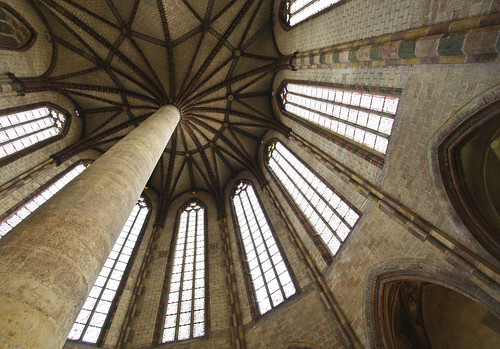
The Jacobin Palm of Toulouse
En route to WYD in Madrid, the English Dominican Pilgrimage stopped in Toulouse and had Mass on the altar over the tomb of St Thomas Aquinas, which is in this beautiful Gothic church that was once a Dominican priory church.
[FUENTE]
viernes, 5 de agosto de 2011
El Aquinate entre los mayores filósofos de la historia según encuesta de la BBC
http://thomistica.net/news/2011/8/5/aqui...
miércoles, 3 de agosto de 2011
miércoles, 6 de julio de 2011
Los Mandamientos
JULY 6, 2011
Aquinas on the Decalogue
Matthew Levering speaking at Wheaton College - a brief audio excerpt of a lecture on St Thomas Aquinas on the Decalogue. Link to audio on iTunes and at Wheaton as Mp3. The text of Aquinas's Explanation of the Ten Commandments is available at the Dominican House of Studies priory site here.Summary of the Ten CommandmentsThese are the ten precepts to which Our Lord referred when He said: “If you would enter into life, keep the commandments” (Mt 19:17). There are two main principles of all the Commandments, namely, love of God and love of neighbor. The man that loves God must necessarily do three things: (1) he must have no other God. And in support of this is the Commandment: “You shall not have strange gods”; (2) he must give God all honor. And so it is commanded: “You shall not take the name of God in vain”; (3) he must freely take his rest in God. Hence: “Remember that you keep holy the Sabbath day.”But to love God worthily, one must first of all love one’s neighbor. And so: “Honor your father and mother.” Then, one must avoid doing harm to one’s neighbor in act. “You shall not kill” refers to our neighbor’s person; “You shall not commit adultery” refers to the person united in marriage to our neighbor; “You shall not steal” refers to our neighbor’s external goods. We must also avoid injury to our neighbor both by word, “You shall not bear false witness,” and by thought, “You shall not covet your neighbor’s goods” and “You shall not covet your neighbor’s wife.”

jueves, 23 de junio de 2011
Charlton Heston narra la vida de Santo Tomás
JUNE 22, 2011
Saint Thomas Aquinas

Charlton Heston narrates Kenneth L Schmitz, St Thomas Aquinas (Nashville, TN: Knowledge Products ; Ashland, Or: Blackstone Audiobooks, 2006) audio excerpt, 2 min.
Book Description: In the late 13th century, this quiet reflective Dominican scholar concentrated his work on philosophical concerns that today would be considered to be partly theological. He combined the work of Aristotle with Christian, Jewish, Muslim, and pagan thought to reconcile reason and faith; he believed we can know that God exists, but not what God is like. Thomas's masterpiece, the Summa Theologiae (Summa Theologica), contains over 10,000 objections and replies to fundamental questions about God and the world. It enumerates virtues and vices, and it includes Thomas's famous "five ways" to prove God's existence, which are (1) the unmoved mover, (2) the uncaused cause, (3) the necessary being, (4) the perfect Goodness, and (5) the guiding intelligence. Thomas believed that God is absolutely simple, perfect, good, infinite, omnipresent, changeless, eternal, and unique.
FUENTE: Dominican History.
Suscribirse a:
Entradas (Atom)